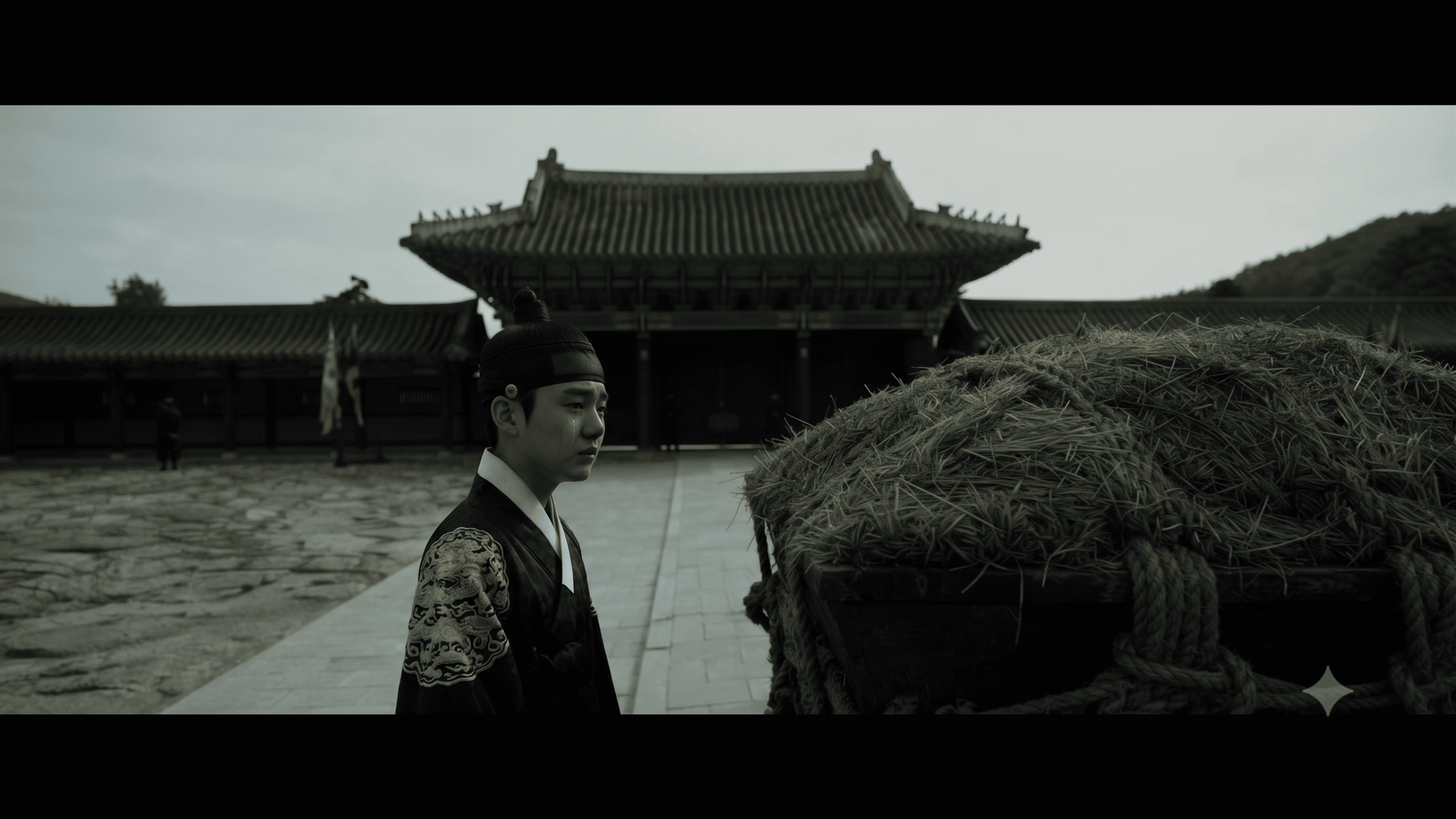
- Imagine inheriting a crown while the blood-soaked ghost of your tortured father haunts every single hallway of your royal palace.
- In 1762, Crown Prince Sado—the heir to the Joseon throne—was condemned to a death so grotesque and merciless that it fractured the soul of the Korean royal court forever.
- Driven mad by severe political conspiracies and his own deteriorating mind, his own father, King Yeongjo, ordered Sado to be locked alive inside a massive wooden rice chest in the scorching summer heat.
- For eight agonizing days, the young prince scratched frantically at the wood and begged for water from inside that sweltering box until he suffocated to death in total solitude.
- Watching his father slowly murdered from outside the courtyard was an eleven-year-old boy named Prince Lee San, forced into absolute silence to save his own skin.
- When that traumatized boy finally ascended the throne as King Jeongjo years later, his very first royal declaration echoed like a chilling curse through the throne room: “I am the son of the late Crown Prince Sado.”
- Surrounded by the vicious factional assassins who murdered his father, Jeongjo knew he was walking a daily tightrope over an active volcano.
- To protect his crown and honor his father’s shattered memory, the brilliant young king hatched a master plan: he would build an impregnable, utopian fortress city from scratch and move the entire royal capital there.
- He selected a strategic basin 30 kilometers south of Seoul called Suwon, forcibly relocating the local residents with generous state compensation to build his dream city.
- To design this revolutionary military stronghold, Jeongjo recruited a genius scholar named Jeong Yak-yong, who combined traditional Korean defensive architecture with cutting-edge Western engineering.
- Instead of relying purely on heavy stone, they utilized fired red bricks, clever sliding gun slits, and specially designed cranes called jujeol to hoist massive rocks without breaking workers’ backs.
- Completed in just two and a half years between 1794 and 1796, Hwaseong Fortress wasn’t just a military wall—it was a high-tech marvel featuring multi-story watchtowers, secret bunkers, and artillery command posts.
- Jeongjo designed the fortress walls to snake gracefully for nearly 6 kilometers across hills and streams, mirroring the natural contours of the landscape like a sleeping dragon guarding his father’s spirit.
- Every single stone block was meticulously stamped with the worker’s name and region of origin, ensuring absolute accountability and craftsmanship.
- The emotional centerpiece of the complex was Haseong Haenggung, a magnificent temporary palace where Jeongjo planned to retire and spend his final years in peace.
- More importantly, Jeongjo built a grand royal tomb for his father nearby, marching down from Seoul in lavish, theatrical processions with thousands of royal guards to pay his respects.
- Tragically, Jeongjo’s grand vision of a reformed, independent Joseon dynasty was cut brutally short when he died mysteriously at the age of 48 under deeply suspicious medical circumstances.
- Without his iron-willed protection, the political enemies clawed their way back to power, and Suwon Hwaseong slowly faded into a neglected relic scarred by decades of war and colonial occupation.
- During the Korean War, heavy artillery blasts tore gaping holes through its ancient brick gates and watchtowers, leaving bloodstains on its storied ramparts once again.
- But thanks to a rare stroke of historical fortune, Joseon dynasty architects had left behind the Hwaseong Seongyeok Uigwe—an exhaustive, illustrated blueprint detailing every single nail, brick, and beam used in construction.
- Because of this meticulous manual, UNESCO designated Hwaseong Fortress a World Heritage site in 1997, praising it as one of the few surviving masterpieces of 18th-century military architecture in East Asia.
- Today, when you walk along the sweeping parapets of Hwaseong at sunset, the stark contrast between ancient red bricks and modern Suwon city lights creates an eerie, breathtaking time warp.
- You can peer through the seongno (arrow-shooting holes) where elite royal archers once scanned the horizon for assassins plotting against the young king.
- Walking these walls isn’t just a casual heritage tour; it is a heavy, emotionally resonant walk through an architectural monument born from deep trauma, undying filial piety, and absolute political defiance.
- If you want to touch the raw, beating heart of Korean dynastic history without the sterile crowds of Seoul’s central palaces, you must pack your walking shoes and head straight to the tragic king’s fortress.
Insider Playbook: Exploring Suwon Hwaseong Fortress
Skip the generic tourist traps. Here is a locally optimized navigation playbook designed to maximize your visual storytelling, narrative depth, and sensory experience at Suwon Hwaseong Fortress.
| Category | Insider Tip |
| The Starting Point (Paldalmun Gate & Traditional Market) | Begin your adventure at Paldalmun Gate, the majestic southern gate sitting right in the middle of a bustling traditional market. Grab a hot, freshly fried Suwon-style sweet chicken skewer from the nearby alley before stepping onto the fortress trail. |
| The Sunset Climb to Seojangdae (West Command Post) | Time your walk so you reach Seojangdae (the West Command Post) right before golden hour. Perched high on Jangan Park hill, this is where King Jeongjo personally commanded troop reviews; the sweeping panoramic view of modern Suwon merging with ancient stone walls is unmatched. |
| The Architectural Climax (Hwaseomun & Janganmun) | Walk down toward Hwaseomun and Janganmun (the grand northern gate). Notice the semi-circular outer defensive walls (ongseong) designed to trap incoming invaders in a crossfire—a textbook example of brilliant 18th-century tactical engineering. |
| The Grand Finale: Flying Suwon Hot Air Balloon (Helium Ride) | Instead of just walking the entire 6km loop, head down to the open plaza near Changnyongmun Gate in the evening and hop onto the Flying Suwon tethered helium balloon. Floating 150 meters up into the night sky gives you a breathtaking bird’s-eye view of the entire illuminated fortress outline layout. |