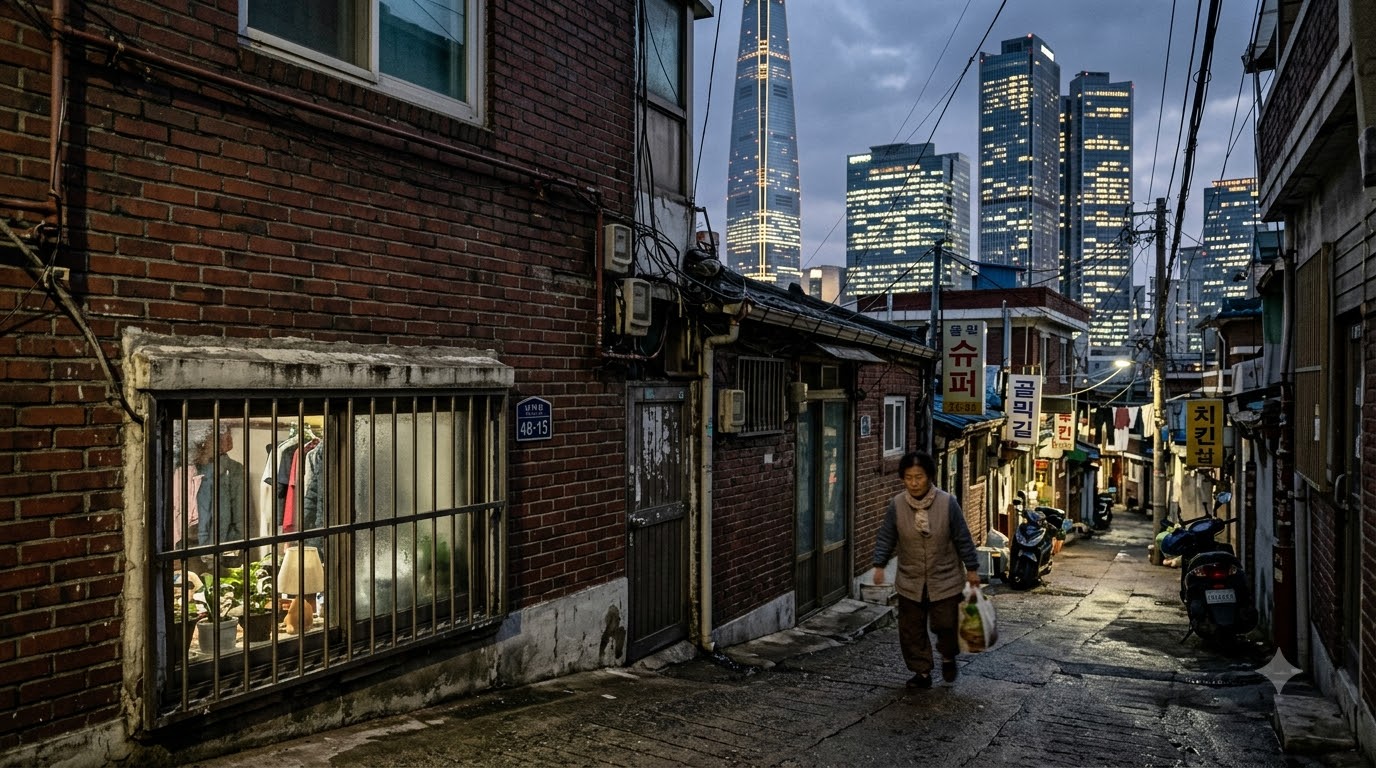
1. Global cinematic masterpieces put international spotlights on Seoul’s extreme spatial inequality, personified by semi-basement apartments.
2. While tourists admire glittering skyscrapers and K-pop billboards, a gritty exploration of hillside neighborhoods reveals the harsh reality of urban housing strata.
3. The iconic *banjiha* (semi-basement) units and rooftop *okbang* structures represent unique architectural adaptations born from rapid population surges.
4. During the high-density housing crises of the 1980s, government mandates required basement construction in low-rise multi-family homes as mandatory civil defense shelters.
5. Citizens facing severe housing shortages eventually converted these reinforced subterranean bomb shelters into permanent residential rental units.
6. Walking through historic hillside communities like Ahyeon-dong or Manri-dong exposes rows of multi-layered homes stacked precariously along steep inclines.
7. Semi-basement windows sit flush with street level, offering residents a direct, unblinking view of passing pedestrian ankles and drifting street dust.
8. Conversely, rooftop rooms offer panoramic urban views paired with brutal exposure to freezing winter drafts and blistering summer heatwaves.
9. The architectural topography of these districts maps out the financial gradients of the capital with stunning physical accuracy.
10. Narrow concrete staircases wind steeply between tightly packed dwellings, creating dense labyrinths where community life spills directly outdoors.
11. Foreign VIPs touring these residential quarters are consistently struck by the sharp proximity between luxury towers and cramped hillside quarters.
12. Municipal regeneration projects and sweeping redevelopment initiatives gradually replace these organic neighborhoods with uniform high-rise apartment complexes.
13. Despite aggressive gentrification waves, pockets of baseline urban housing endure, harboring generations of working-class families.
14. The cinematic resonance of these spaces transformed ordinary residential alleys into global cultural landmarks recognized worldwide.
15. Sunlight struggles to pierce deep into semi-basement rooms, requiring constant artificial lighting even during bright midday hours.
16. Laundry lines strung across rooftop terraces flutter against towering corporate headquarters looming menacingly in the background skyline.
17. Urban sociologists study these micro-housing typologies as physical manifestations of rapid compressed economic stratification.
18. Walking these steep residential alleys provides travelers with a grounded, humanizing counter-narrative to glossy commercial tours.
19. The sound of rolling suitcases echoes loudly against concrete walls, signaling the creeping pressure of modern housing transformation.
20. Local convenience stores tucked into hillside corners serve as vital social hubs for elderly residents navigating shifting neighborhood demographics.
21. The architectural ingenuity required to carve livable spaces out of steep, rocky hillsides highlights grassroots survival skills.
22. Inbound insider tours balance metropolitan glamour with honest examinations of urban housing evolution and working-class endurance.
23. The persistent dampness characteristic of semi-basements required creative domestic adaptations long before silver-screen fame.
24. Photographers flock to these labyrinthine stairways to capture the striking visual interplay between old-school masonry and futuristic glass towers.
25. Exploring these working-class districts fosters deep empathy for the human stories powering the megacity’s daily economic engine.
26. The transition from hillside slums to modern apartment towers mirrors the dramatic upward mobility achieved by post-war generations.
27. Travelers seeking sociological depth find these residential enclaves to be essential chapters in understanding contemporary Korean society.
28. The warm glow spilling from small semi-basement windows at dusk evokes quiet resilience amidst urban pressure.
29. Unearthing micro-housing realities grounds the traveler’s perception in the authentic lived experiences of everyday citizens.
30. Step into the winding hillside alleys and witness the profound architectural reality behind Seoul’s famous residential strata.
| Insider Playbook: Hillside Housing & Banjiha Trail | |
|---|---|
| Time & Location | 11:00 AM, Ahyeon Station Exit 1 / Ahyeon-dong & Manri-dong Hillside Alleys |
| Viewing Point | Walk narrow concrete staircases winding between multi-layered homes, observing street-level semi-basement windows (*banjiha*). |
| Core Action | Ascend to ridge viewpoints to observe the sharp architectural contrast between organic hillside housing and modern corporate towers. |
| Shooting Tip | Capture a striking medium shot framing a humble semi-basement window with glittering high-rises towering in the background. |