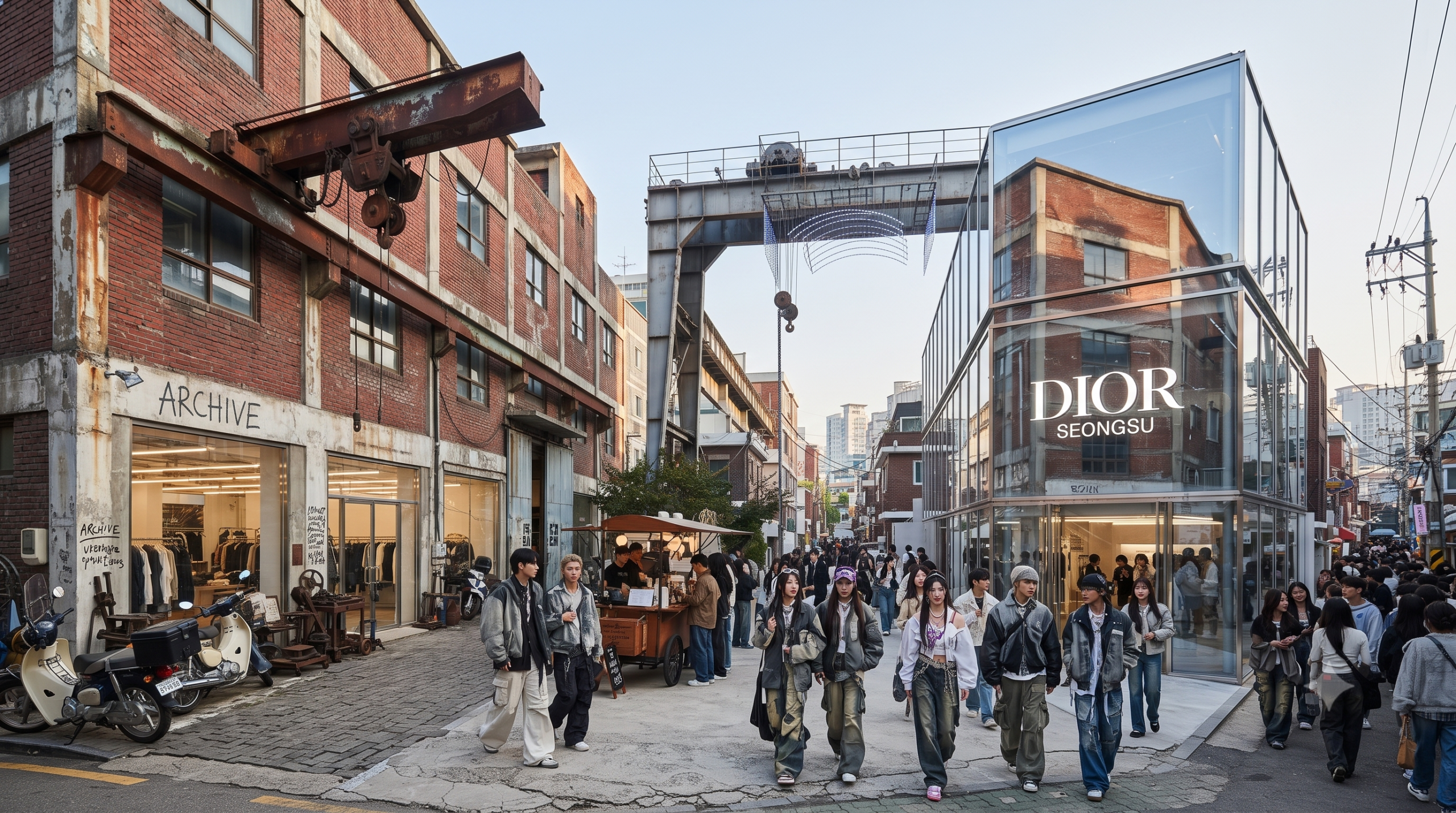
- If you wander into the eastern edge of Seoul today, you will step inside a surreal architectural time warp where grease-stained machine shops rub shoulders with multi-million dollar luxury pop-up stores.
- This is Seongsu-dong, a gritty industrial district that spent decades smelling relentlessly of raw leather, engine oil, and iron dust before experiencing the most violent urban glow-up in modern history.
- Back in the 1970s and 80s, this sprawling riverside area served as the beating, sweaty heart of South Korea’s explosive manufacturing boom.
- Thousands of cramped shoe factories, printing presses, and heavy metal workshops churned out goods day and night, forming the invisible baseline of the nation’s rapid economic miracle.
- But as South Korea transitioned into a high-tech digital economy and skyrocketing land prices pushed heavy industry out of the capital, Seongsu-dong was left to rot.
- By the late 1990s and 2000s, the once-bustling brick factories stood abandoned and silent, their broken windows reflecting a forgotten era of backbreaking manual labor.
- To the average city planner, it was just another decaying industrial slum waiting to be bulldozed into boring, uniform high-rise apartment complexes.
- But history took a brilliant, unpredictable left turn when broke young artists, indie designers, and rebel baristas began sniffing around the dusty alleys.
- Attracted by dirt-cheap rent and cavernous, high-ceilinged floor plans, they started squatting in vacant shoe warehouses and turning them into raw, unpolished creative studios.
- They refused to paint over the peeling lead paint, polished concrete floors stained with decades of machine oil, or exposed iron beams.
- Instead, they weaponized the industrial decay, celebrating the raw, unwashed aesthetic of the buildings rather than hiding it behind drywall and corporate gloss.
- Word spread like wildfire among Seoul’s creative underground, transforming the desolate ghost town into an underground haven for counter-culture.
- Soon, specialty coffee roasters moved in, serving artisanal single-origin brews out of spaces that used to assemble combat boots.
- Global fashion brands quickly noticed the intoxicating aura of authentic urban grit and began throwing massive, high-concept immersive pop-up exhibitions in the old machine yards.
- Even luxury giants like Dior constructed breathtaking ephemeral glass-and-steel greenhouse structures right in the middle of rusty auto-repair blocks, creating a mind-bending collision of wealth and grit.
- Today, Seongsu-dong is universally crowned as the “Brooklyn of Seoul,” though locals will tell you that New York has nothing on the sheer speed and hyper-modern energy of Seongsu’s transformation.
- On any given weekend, the narrow alleys are flooded with trendsetting fashionistas, international K-pop idols scouting out indie concept stores, and curious global travelers.
- You can walk into a multi-story concept lifestyle shop where underground streetwear hangs directly beneath massive industrial overhead cranes left over from the 1970s.
- Next door, a baker who trained in Paris serves sourdough bread out of a brick warehouse that once manufactured industrial-grade machine screws.
- Despite the soaring commercial rents and aggressive corporate gentrification, Seongsu manages to retain its gritty soul by aggressively preserving its structural scars.
- The neighborhood feels alive precisely because it refuses to erase its past; every cracked brick tells a story of blood, sweat, and tears from Korea’s industrial trenches.
- It is a living, breathing testament to how a city can reinvent its future without completely murdering its historical memory.
- Walking these streets is not just about shopping or drinking trendy matcha lattes in a photogenic sunlit courtyard.
- It is an immersive masterclass in modern urban resilience, proving that yesterday’s garbage dumps can become tomorrow’s cultural epicenters if given enough creative freedom.
- If you want to touch the beating, trendsetting pulse of contemporary Seoul youth culture while standing in the footprints of its industrial ancestors, Seongsu-dong is the only destination that matters.
Insider Playbook: Exploring Seongsu-dong
| Category | Insider Tip |
| The Starting Point (Seongsu Station Exit 3 & Cafe Street) | Emerge from Exit 3 and dive straight into the dense café alleyways. Start your morning with a pour-over coffee at Daelim Changgo, a legendary sprawling red-brick grain warehouse turned massive art-cafe that kickstarted the neighborhood’s entire renaissance. |
| The Architectural Contrast (Dior Seongsu & Luxury Alleys) | Stroll down to the iconic Dior Seongsu pop-up structure. Even if you don’t enter the store, walk around the surrounding back alleys where ultra-luxury flagship architecture violently collides with low-key, grease-stained auto-repair shops. |
| The Creative Compound (E-Mart Seongsu / S-Factory) | Hunt down old industrial manufacturing complexes like S-Factory, which have been repurposed into massive, flexible culture platforms hosting cutting-edge global art installations, design markets, and fashion runway shows. |
| The Grand Finale: Seoul Forest Park Sunset (Seoul Forest) | Wrap up your urban trek by walking toward the eastern edge of the neighborhood into Seoul Forest. Grab a blanket, sit under the giant canopy trees, and watch Seoul’s coolest generation unwind as the golden hour light hits the skyline. |