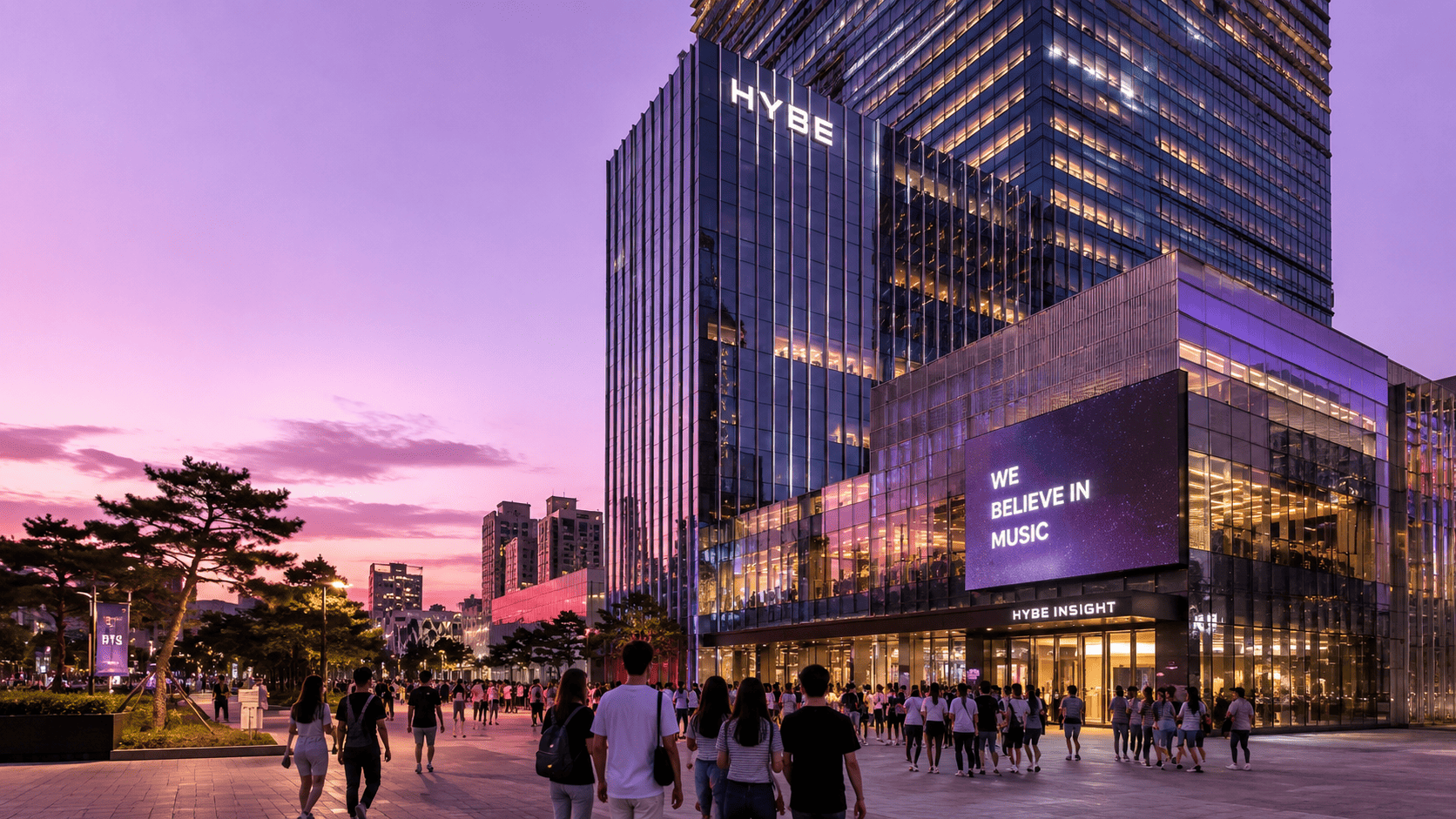
- I love BTS.
- Working in the inbound travel industry, I also genuinely love ARMY from all over the world who visit South Korea.
- Watching international travelers explore Seoul’s purple landmarks with tears of joy makes me immensely proud as a Korean.
- Today, I want to share the story of the HYBE headquarters in Yongsan, the miracle ascent of BTS, and the lesser-known behind-the-scenes troubles surrounding Chairman Bang Si-hyuk that foreign media rarely cover in depth.
- First, an essential travel advisory.
- Far too many visitors rely on outdated guides and head to Yongsan expecting to walk into the “HYBE INSIGHT” museum.
- Save your commute: the museum space located inside the Yongsan headquarters officially shut its doors in early 2023.
- The Yongsan tower operates strictly as a corporate office with high-level security; casual visitors cannot enter the lobby.
- Still, hundreds of international travelers arrive daily to snap photos before the monumental glass facade and explore the fan-run cafes and merchandise shops clustered in the alleys behind it.
- Looking at this 19-story corporate fortress, anyone familiar with the Korean music industry a decade ago cannot help but feel stunned.
- When seven young men debuted under a tiny label named Big Hit Entertainment in June 2013, the conglomerate HYBE was unimaginable.
- Back then, the Korean music landscape was monopolized by the “Big Three”—SM, JYP, and YG—who held absolute sway over broadcasters and music charts.
- Big Hit had barely a dozen employees, running out of a rundown Gangnam basement studio where the staff literally worried about ceiling leaks on rainy days.
- Broadcast slots were hard to come by; the group often performed as last-minute substitutes when bigger acts canceled.
- Bang Si-hyuk and BTS took the exact opposite road of the standard industry playbook.
- Instead of currying favor with television producers, they engaged directly with global youth via Twitter and YouTube in raw, unfiltered communication.
- Paired with lyrics addressing youth disillusionment, mental health, and social inequality written by the members themselves, teenage and twenty-something audiences in the West and South America responded first.
- What followed was unprecedented in modern pop music history.
- From their initial Billboard Music Award in 2017 to reaching Billboard Hot 100 #1 with “Dynamite” in 2020, their run led directly to United Nations General Assembly addresses and official visits to the White House.
- A cash-strapped agency that almost faced bankruptcy morphed into HYBE, a corporate titan valued in the trillions of won.
- It swallowed top agencies like Pledis (SEVENTEEN), Source Music (LE SSERAFIM), and ADOR (NewJeans), claiming throne status over K-pop.
- That is the legendary ascent familiar to every global fan.
- Intense light, however, casts long shadows.
- Beyond the headlines translated into English, severe corporate crises have emerged around HYBE and Chairman Bang Si-hyuk.
- First came the public dispute with former ADOR CEO Min Hee-jin, the creative force behind NewJeans.
- The clash shattered the PR image of HYBE’s multi-label model, exposing bitter internal feuds, accusations of creative plagiarism across sub-labels, and explosive allegations of management overreach.
- Second was personal tabloid fallout, such as Chairman Bang being spotted by street streamers in Beverly Hills alongside a controversial live-streamer, which damaged the corporate standing expected of a global conglomerate leader.
- The most critical issue involves ongoing financial and regulatory scrutiny over pre-IPO transactions.
- Long-standing investigations examined private equity deals made before HYBE’s public listing regarding investor transparency and profit allocation, leading to legal hurdles and court-ordered share freezes that shook institutional trust.
- Domestic industry analysts increasingly view this period as the most turbulent corporate test since the company’s inception.
- The towering glass structure in Yongsan stands both as a monument built on the sweat and blood of seven artists and as a stark reflection of runaway corporate entertainment capital.
- Even so, the honest comfort BTS’s music brought to millions and the global solidarity of ARMY remain entirely untainted by board-level turmoil.
- For those visiting Seoul: admire the headquarters from outside, explore the fan community spaces nearby, and appreciate the genuine underdog triumph behind it all.
- Here is a clear breakdown for navigating to the Yongsan site:
| Item | Details & Insider Tips |
|---|---|
| Official Address | 42 Hangang-daero, Yongsan-gu, Seoul (HYBE Yongsan) |
| Subway Line 4 | Sinyongsan Station, Exit 2 ➔ Walk straight toward Hangang Bridge (approx. 8–10 mins) |
| Subway Line 1 / Gyeongui-Jungang | Yongsan Station, Exit 1 ➔ Walk straight toward Hangang Bridge North (approx. 10–12 mins) |
| Public Bus | Get off at ‘Hangangdaegyo Bukdan / LG Uplus’ stop (drops off right in front of the building) |
| Interior Access | Restricted (Private corporate facility; public entry to the lobby is blocked by security) |
| Recommended Walking Route | Building facade photo-op ➔ Back alleys of Hangangno 3-ga (purple-themed fan cafes & indie merchandise shops) |
- Keep this guide handy to avoid navigation mistakes and enjoy your pilgrimage to the epicenter of modern K-pop history.
