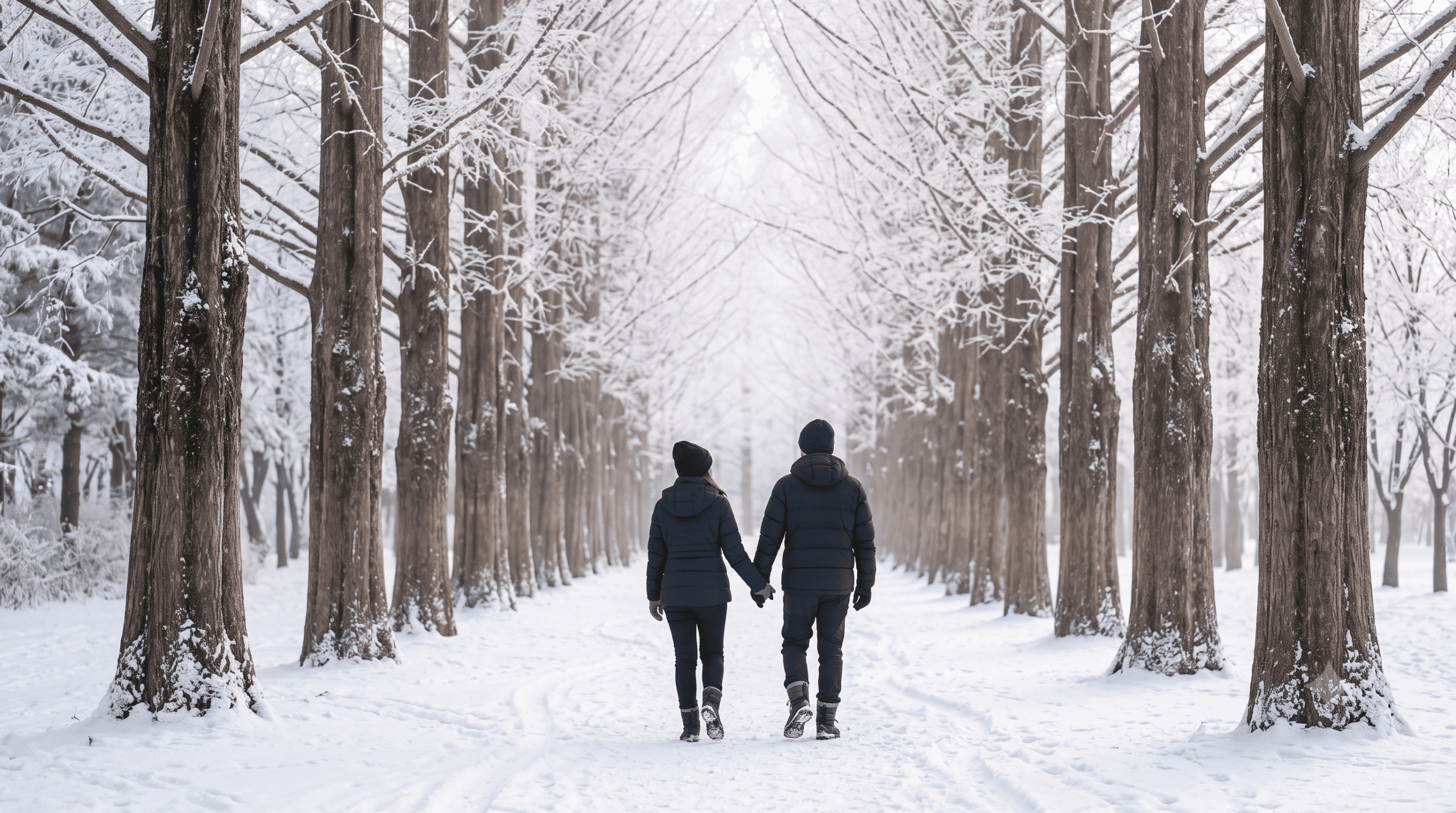
- To millions of international travelers, Nami Island is the ultimate romantic fairy tale in South Korea.
- It is celebrated worldwide as the snowy filming location of the iconic K-drama Winter Sonata, famous for its towering Metasequoia Lane and picturesque riverside paths.
- But if you look beneath the romantic scenery, the real history behind the island’s name and ownership plays out like a high-stakes political thriller.
The Bloodline of a Tragic Warrior
- The story begins in the 15th century during the reign of King Yejong of the Joseon Dynasty.
- At the time, Joseon had a legendary military genius named General Nami (南怡). By age 26, he had suppressed major internal rebellions, secured the northern borders against the Jurchen tribes, and was appointed Minister of National Defense.
- However, being extraordinarily young, brilliant, and influential quickly painted a target on his back.
- Conservative rivals in the royal court, led by high-ranking official Yu Ja-gwang, saw General Nami as their primary political threat.
- Yu framed him by deliberately altering a single character in a poem General Nami had written.
- The line originally read: “If a man cannot pacify the nation (未平國) by twenty, who will call him a true hero?” Yu altered it to “If a man cannot seize the nation (未得國)…”, framing him for high treason.
- Despite his loyalty, General Nami was subjected to severe torture and executed at the tragically young age of 28.
- According to local legend, a symbolic mound was created on a deserted sandy bank in the Han River to honor the fallen warrior. This sandy shoal eventually became known as Nami Island.
- For centuries, folklore warned that “anyone who dares take a single pebble from this mound will bring a curse upon their family.” As a result, the island remained an untouched, wild sandbank for hundreds of years.
The 1965 Turning Point: From Wasteland to Private Estate
- A major turning point occurred in 1965 following the completion of the Cheongpyeong Dam.
- The dam permanently raised the water level, turning what was once a flood-prone sandbank into a permanent, isolated island surrounded by the Bukhan River.
- Around this time, a prominent figure bought the entire 460,000-square-meter island for a bargain price: Min Byung-do, the former Governor of the Bank of Korea.
- The controversy lies in his family lineage. Min Byung-do was the direct grandson of Min Young-hwi, widely documented as one of the wealthiest pro-Japanese collaborators (Chinilpa) during the colonial era.
- Min Young-hwi had accumulated immense personal wealth through imperial titles and massive government grants awarded by the Japanese administration.
- After national liberation, special South Korean investigative commissions began confiscating properties linked to colonial collaborators nationwide.
- Yet, Nami Island completely avoided state confiscation.
- The law specifically targeted properties acquired directly as rewards for colonial collaboration. Because Nami Island was purchased in 1965 using Min Byung-do’s private earnings decades after liberation, it was legally cleared of confiscation.
- Min Byung-do transformed the barren land by planting tens of thousands of trees, creating the private tourism enterprise operated today as the Naminara Republic.
- In summary: A barren riverbed once preserved by a tragic Joseon general’s curse was acquired by the descendant of a controversial colonial tycoon, ultimately transforming into the romantic K-drama sanctuary that draws millions of couples from around the world today.
- When you walk beneath the golden trees of Nami Island today, knowing this hidden clash of history makes the landscape look entirely different.
Practical Travel Logistics for 2026
If you are planning your visit, here are the essential details to organize your trip efficiently:
| Category | Practical Details |
|---|---|
| Location | 1 Namisum-gil, Namsan-myeon, Chuncheon-si, Gangwon-do |
| How to Get There | Take the ITX-Cheongchun train from Yongsan / Cheongnyangni Station to Gapyeong Station (approx. 55 mins), followed by a 5-minute taxi ride to Gapyeong Wharf. |
| Admission + Ferry | 16,000 KRW (Regular adult round-trip ticket) |
| Zip Wire Entry | Approx. 49,900 KRW (Includes zip line entry and return ferry ticket) |
| Best Time to Visit | Take the early morning ferry between 7:30 AM and 8:00 AM to explore the Metasequoia Lane before major tour buses arrive. |
| Local Dining | The cluster of restaurants directly outside Gapyeong Wharf is famous for Chuncheon Dakgalbi (spicy stir-fried chicken). |