Skip to content
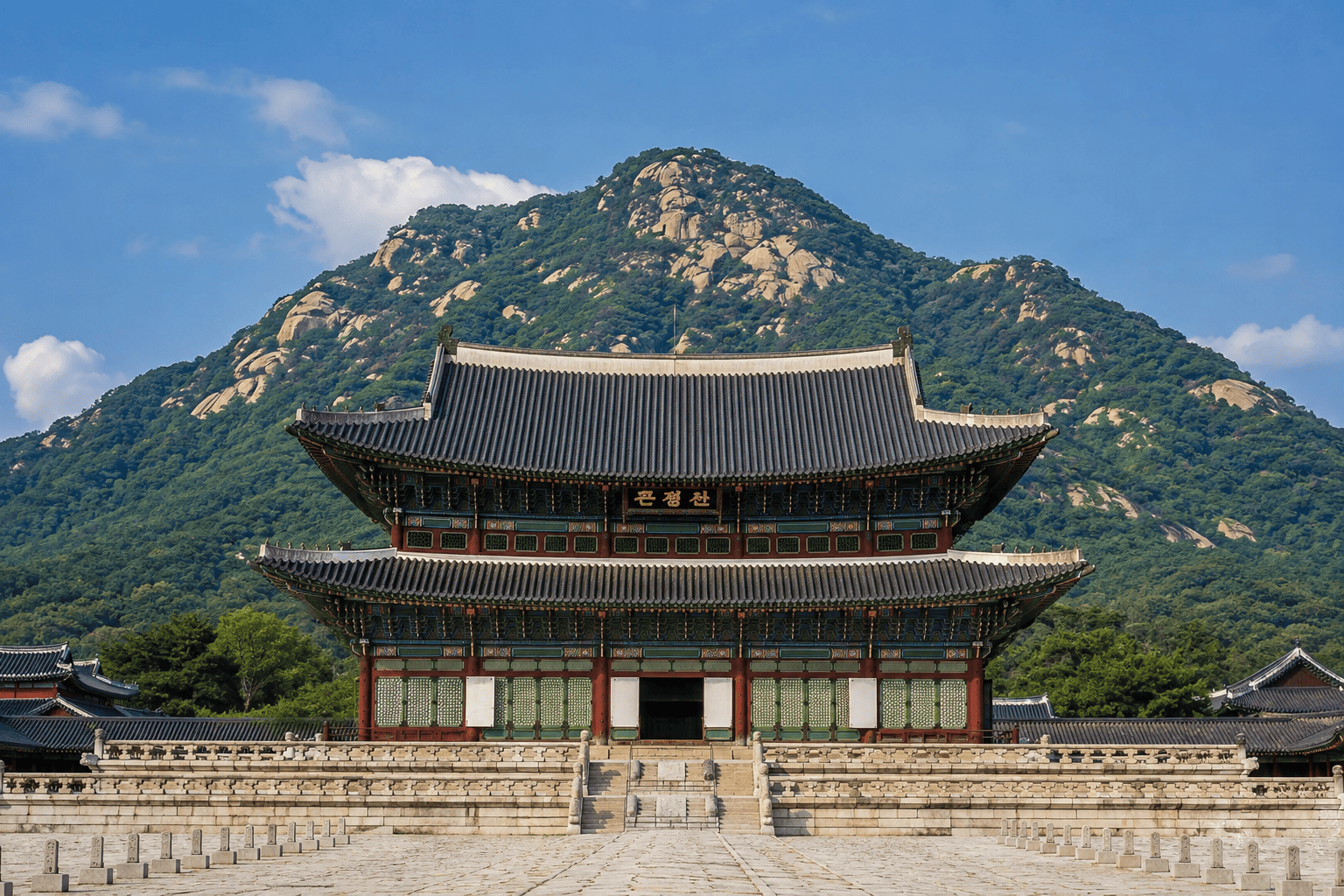
- Most international travelers visiting Seoul head straight to Gyeongbokgung Palace first.
- Dressed in vibrant traditional Hanbok, people take photos against the grand royal backdrop, assuming it has stood peacefully for centuries.
- The actual history behind these walls, however, is filled with bloody betrayal, complete destruction, and centuries of eerie silence.
- In 1392, King Taejo founded the Joseon Dynasty and immediately moved the capital to Hanyang (modern-day Seoul) to wipe out the old regime’s influence.
- Completed in 1395, Gyeongbokgung—meaning “The Palace Greatly Blessed by Heaven”—became the primary seat of royal power.
- The design was heavily debated between Buddhist monk Muhak (who favored facing east towards Mount Inwang) and Confucian scholar Jeong Do-jeon.
- Jeong insisted on facing south against Bugaksan Mountain, adhering to the classic principle: “A true sovereign always faces south to govern.”
- But the golden era did not last long.
- Just three years after completion in 1398, Prince Yi Bang-won launched a violent coup known as the First Strife of Princes, assassinating key ministers including chief architect Jeong Do-jeon right inside the palace grounds.
- Traumatized by the fratricidal bloodbath, the second king fled back to the old capital, Kaesong.
- When Yi Bang-won eventually took the throne as King Taejong and returned to Seoul, he refused to live inside the bloodstained Gyeongbokgung, choosing instead to build an entirely new residence to the east: Changdeokgung Palace.
- It was not until King Sejong the Great (the 4th monarch) that Gyeongbokgung fully functioned as the empire’s political and scientific hub—the very place where the Korean alphabet (Hangul) was born.
- Then came 1592. The Japanese Invasions of Korea (Imjin War) erupted, reducing Gyeongbokgung completely to ashes.
- Post-war royal finances were decimated. Due to its massive footprint and lingering reputation as an ill-fated ground, the court abandoned Gyeongbokgung and rebuilt Changdeokgung instead.
- For the next 273 years, the primary royal palace of Joseon remained an abandoned wasteland of charred foundation stones and overgrown weeds.
- It wasn’t until the mid-19th century that a radical political figure decided to gamble the entire kingdom’s economy to bring it back to life. (Continued in Part 2)
💡Quick Visitor Facts (Part 1)
- Location: 161 Sajik-ro, Jongno-gu, Seoul (Subway Line 3, Gyeongbokgung Station, Exit 5)
- Opening Hours: 09:00 – 18:00 (Last admission at 17:00 / Closed on Tuesdays)
- Admission: 3,000 KRW (Adults 19–64) / 100% FREE for anyone wearing Hanbok