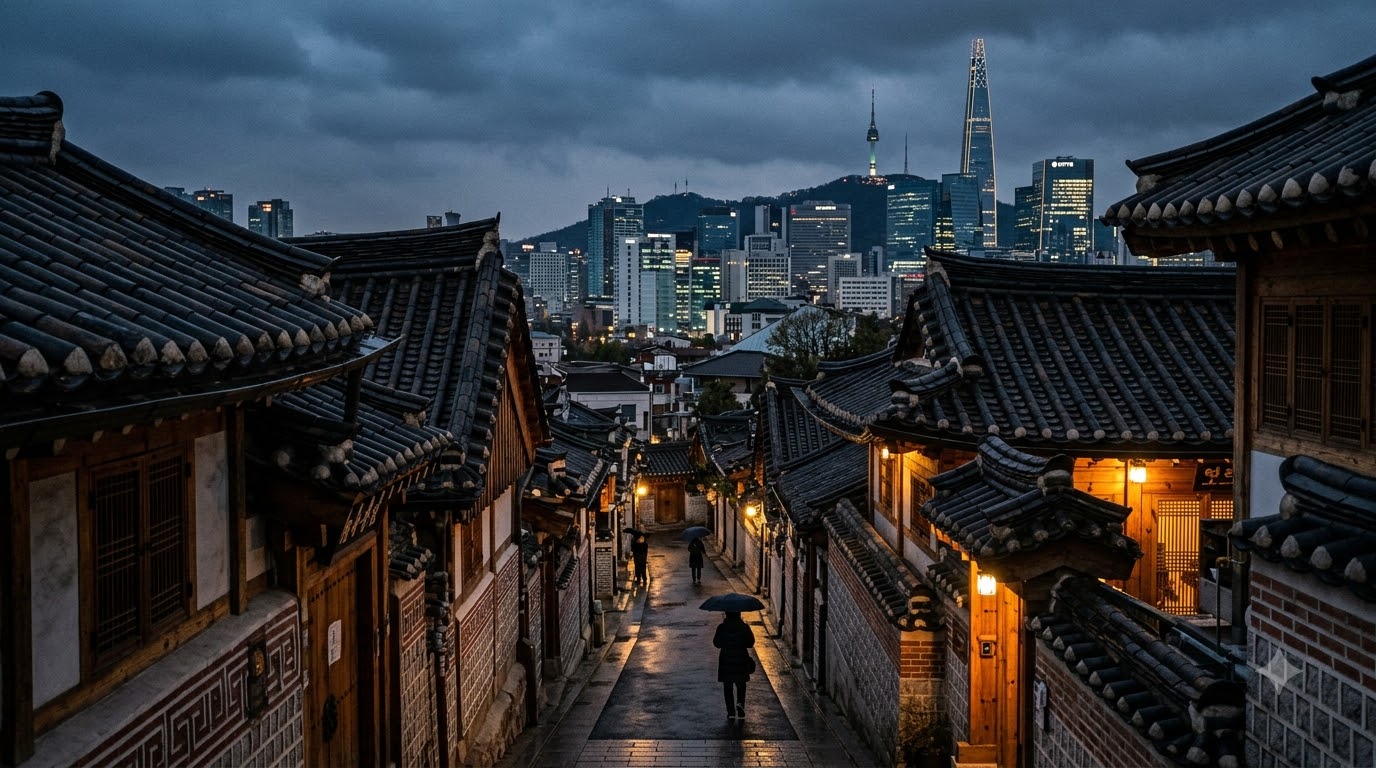
- Every year, millions of international travelers flock to Seoul, pulling out their smartphones to snap picturesque photos of traditional tiled-roof wooden houses nestled against a backdrop of futuristic skyscrapers.
- Tourist brochures and glossy travel guides universally market Bukchon Hanok Village as a pristine, 500-year-old aristocratic neighborhood straight out of the ancient Joseon Dynasty.
- Yet, if you peel back the romantic marketing gloss and look at the actual architectural and urban planning records, a startling truth emerges.
- The breathtaking, postcard-perfect alleyways of Bukchon that tourists obsess over today are actually a modern urban creation born out of a desperate 1930s real estate boom under Japanese colonial rule.
- To understand the real story behind Seoul’s most famous traditional village, we have to journey back to the founding of Hanyang (modern-day Seoul) in 1392.
- During the early Joseon Dynasty, the hills stretching between Gyeongbokgung and Changdeokgung palaces—known literally as “Bukchon” (North Village)—were indeed reserved exclusively for high-ranking royal officials and nobility (Yangban).
- However, the sprawling estates of ancient aristocrats looked nothing like the dense, uniform clusters of small courtyard houses you see packed tightly into the alleys today.
- Back then, Bukchon was defined by massive, sprawling private compounds surrounded by high walls, complete with servants’ quarters, spacious gardens, and wide buffers of open land.
- As centuries passed, the fortunes of the Joseon aristocracy rose and fell, and by the late 19th and early 20th centuries, many noble families went bankrupt and began selling off parts of their vast ancestral landholdings.
- Following the formal annexation of Korea by Japan in 1910, Seoul (then Gyeongseong) experienced an unprecedented wave of rural-to-urban migration as thousands of people flooded into the capital.
- Housing shortages reached a catastrophic crisis point, prompting clever Korean real estate entrepreneurs and developers to look at the crumbling aristocratic estates of Bukchon with fresh eyes.
- Chief among these developers was a shrewd real estate company owned by Jeong Chung-hyon, who decided to shatter the massive, decaying noble compounds into bite-sized urban lots.
- Rather than preserving ancient history, these developers acted like 1930s urban planners, carving up the old estates into standardized rectangular plots designed for middle-class citizens.
- They invented a brand-new architectural hybrid: a modernized, mass-produced version of the traditional hanok optimized for high-density city living.
- These 1930s hanoks were built using modern materials cleverly disguised as traditional elements, incorporating glass windows, sliding doors, electricity, and water pipes.
- The iconic tiled alleys of Gahoe-dong that travelers love to walk down today were deliberately paved during this exact interwar real estate subdivision wave.
- In a fascinating twist of irony, the “ancient traditional village” tourists admire today is largely a product of 1930s colonial-era speculative urban housing development.
- Despite not being an untouched 500-year-old museum piece, Bukchon’s 1930s urban transformation represents a brilliant chapter of cultural preservation through adaptation.
- When rapid post-war modernization in the 1960s and 70s threatened to bulldoze these wooden homes for high-rise concrete apartments, local residents fought fierce legal battles to protect their unique neighborhood layout.
- Walking through Bukchon today means treading on a living architectural compromise—a place where traditional aesthetics met 20th-century capitalist survival instincts.
- The steep hillsides offer stunning, disorienting contrasts: ancient tiled roofs curve gracefully upward while framing the gleaming glass towers of modern corporate headquarters in the distance.
- Yet, this incredible popularity has brought a modern crisis: over-tourism, noise complaints, and the delicate friction of locals trying to live everyday lives inside a human theme park.
- Local authorities have even introduced designated visiting hours and quiet zones to prevent tourists from treating private bedrooms like public exhibition spaces.
- Stepping into the quiet courtyards early in the morning before the tour buses arrive lets you hear the authentic creak of old pine pillars and the whisper of the wind across ceramic roof tiles.
- It reminds us that history is rarely preserved in a vacuum; it is constantly torn down, reinvented, and rebuilt by the generations who live within its walls.
- If you want to look past the superficial postcard cliches and understand the real layers of Seoul’s urban evolution, Bukchon is an absolute must-visit classroom.
- Lace up your comfortable walking shoes, respect the quiet neighborhoods, and prepare to discover the fascinating modern myth behind Seoul’s most famous traditional alleyways.
Insider Playbook: Bukchon Hanok Village Optimized Walking Route
| Category | Insider Tip |
| The Starting Point (Anguk Station & Samcheong-dong Approach) | Arrive early at Anguk Station (Exit 2) and begin your ascent before 9:00 AM to beat the massive tour bus crowds. Walk up past the Bukchon Culture Center to grab a free detailed map and get your bearings. |
| The Photographic Climax (Gahoe-dong Alley View) | Head straight to Gahoe-dong 31-gil, the iconic sloping alleyway featured on almost every postcard of Seoul. Stand at the crest to capture the stunning juxtaposition of traditional tiled rooftops in the foreground and modern downtown skyscrapers in the background. |
| The Cultural Pitstop (Traditional Hanok Interiors) | Step inside Baek In-je’s House Museum, one of the few massive aristocratic compounds from the early 20th century preserved intact. Unlike private residences, this allows you to legally walk inside, explore the elevated wooden verandas, and experience authentic period architecture. |
| The Grand Finale: Descending into Jongrok & Insadong | Wind your way down the northern slopes toward the artisan alleyways of Samcheong-dong or cross the main street into Insadong to enjoy traditional tea houses and craft shops as a relaxing reward for your morning climb. |