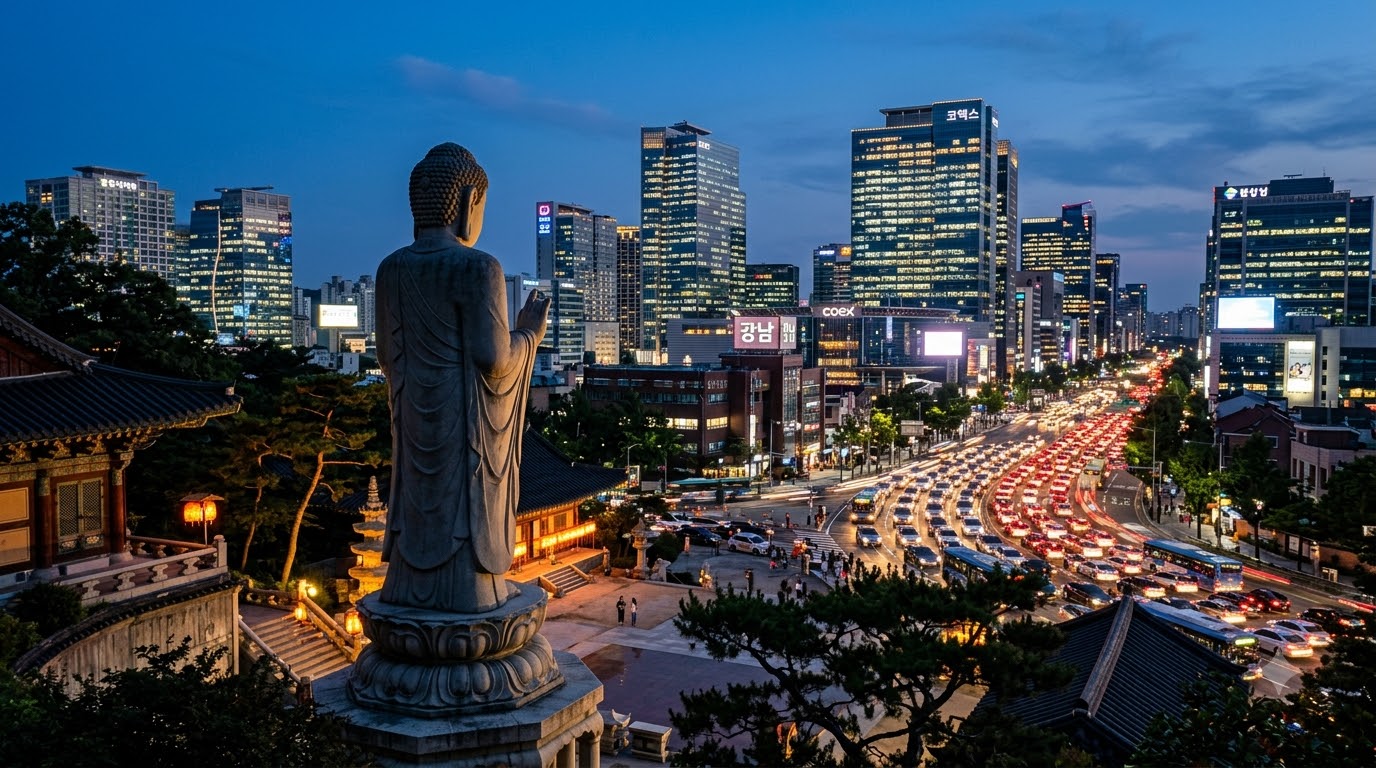
1. Beneath the glitz of designer boutiques and supercar-clogged boulevards, modern Seoul hides a radical, breakneck transformation that happened within a single human lifetime.
2. While global pop anthems celebrate the high life of the southern district, a deep-dive look through an inbound insider’s lens reveals that this glittering asphalt jungle rose straight out of stagnant, muddy rice paddies.
3. Fifty years ago, the territory south of the Han River was considered a rural backwater composed of vegetable patches, mosquito-infested marshes, and agricultural flatlands.
4. The seismic shift occurred when government planners aggressively engineered a massive urban redirection plan to decongest the historic northern core and artificially birth a secondary financial powerhouse.
5. By constructing arterial bridges across the Han River and relocating elite high schools southward, authorities engineered an artificial real estate boom that forced wealth to migrate overnight.
6. Speculative capital poured into the southern plains like a tidal wave, turning ordinary farmers into multimillionaires and spawning an aggressive corporate culture of rapid acquisition.
7. This explosive influx of capital forged a hyper-competitive consumerist ecosystem where architectural styling and brand prestige dictate social survival.
8. Yet, embedded right in the middle of this capitalist machine stands Bongeunsa Temple, a 1,200-year-old Buddhist sanctuary founded during the Silla Dynasty.
9. The surreal visual contrast of a towering stone Maitreya Buddha gazing silently across glass-and-steel skyscrapers captures the ultimate paradox of Seoul’s development.
10. Walking the tranquil temple courtyards while muffled sports car engines roar outside creates a disorienting temporal friction unique to the southern district.
11. Apgujeong Rodeo Street, once the playground for the pioneering 1990s “Orange Tribe” youth culture, laid the early template for Korea’s modern entertainment economy.
12. International travelers wandering these avenues rarely realize that the flawless cosmetic clinics and luxury showrooms rest on ground that smelled of manure just decades prior.
13. The economic acceleration of the district mirrors a broader national obsession with speed, scale, and relentless upward mobility.
14. State-backed development loans and corporate conglomerates worked in lockstep to erect grid-patterned residential blocks that redefined urban aesthetics.
15. Underground, a labyrinth of massive subway lines and subterranean shopping malls connects hyper-dense commercial zones out of the sight of winter weather.
16. Foreign VIPs touring these financial corridors are consistently stunned by the sheer velocity at which concrete towers replaced agricultural soil.
17. The relentless pressure to maintain appearances drives an intense social choreography visible in packed cafes and late-night consulting offices.
18. Behind the high-end facades lies a grueling corporate grind where career status and real estate equity serve as primary metrics of human worth.
19. Urban planners study this southern miracle as an extreme case study in state-directed spatial engineering and speculative real estate capitalization.
20. The transition from mud-drenched fields to billion-dollar land parcels maps the precise trajectory of Korea’s post-war economic miracle.
21. Visitors stepping off luxury coaches onto pristine pavement walk over buried histories of displaced agricultural communities and rapid modernization trauma.
22. The neon glow reflecting off midnight rain puddles channels a futuristic cyberpunk energy unmatched by older Asian capitals.
23. Exploring the wide avenues reveals an intentional design philosophy prioritizing automotive flow and towering commercial visibility over pedestrian warmth.
24. The district’s cultural footprint expands globally through digital media, yet its physical foundation remains rooted in hard-nosed real estate speculation.
25. Pausing at temple gates to watch corporate executives rush past in tailored suits provides an ideal psychological anchor amidst sensory overload.
26. The neighborhood’s evolution exposes how aggressively capital can reshape geography when guided by unyielding administrative willpower.
27. Travelers seeking to understand modern economic ambition must walk these wide sidewalks to witness hyper-capitalism in its rawest architectural form.
28. The towering skyscrapers catching morning sunlight stand as monuments to a population that built an empire out of agricultural mud.
29. Unearthing this sudden urban metamorphosis elevates a simple shopping trip into an eye-opening study of spatial economics.
30. Step into this high-end concrete jungle and confront the dizzying speed of Seoul’s modern capitalist core.
| Insider Playbook: Gangnam Contrast Trail | |
|---|---|
| Time & Location | 10:00 AM, Bongeunsa Station Exit 1 / Bongeunsa Temple Grounds & Apgujeong Rodeo |
| Viewing Point | Stroll through ancient temple wooden halls contrasting against towering glass-and-steel commercial skyscrapers. |
| Core Action | Walk south toward Apgujeong Rodeo Street to experience the physical evolution from quiet temple grounds to elite retail lanes. |
| Shooting Tip | Capture a wide-angle shot framing the giant stone Buddha statue with modern high-rises soaring directly behind it. |