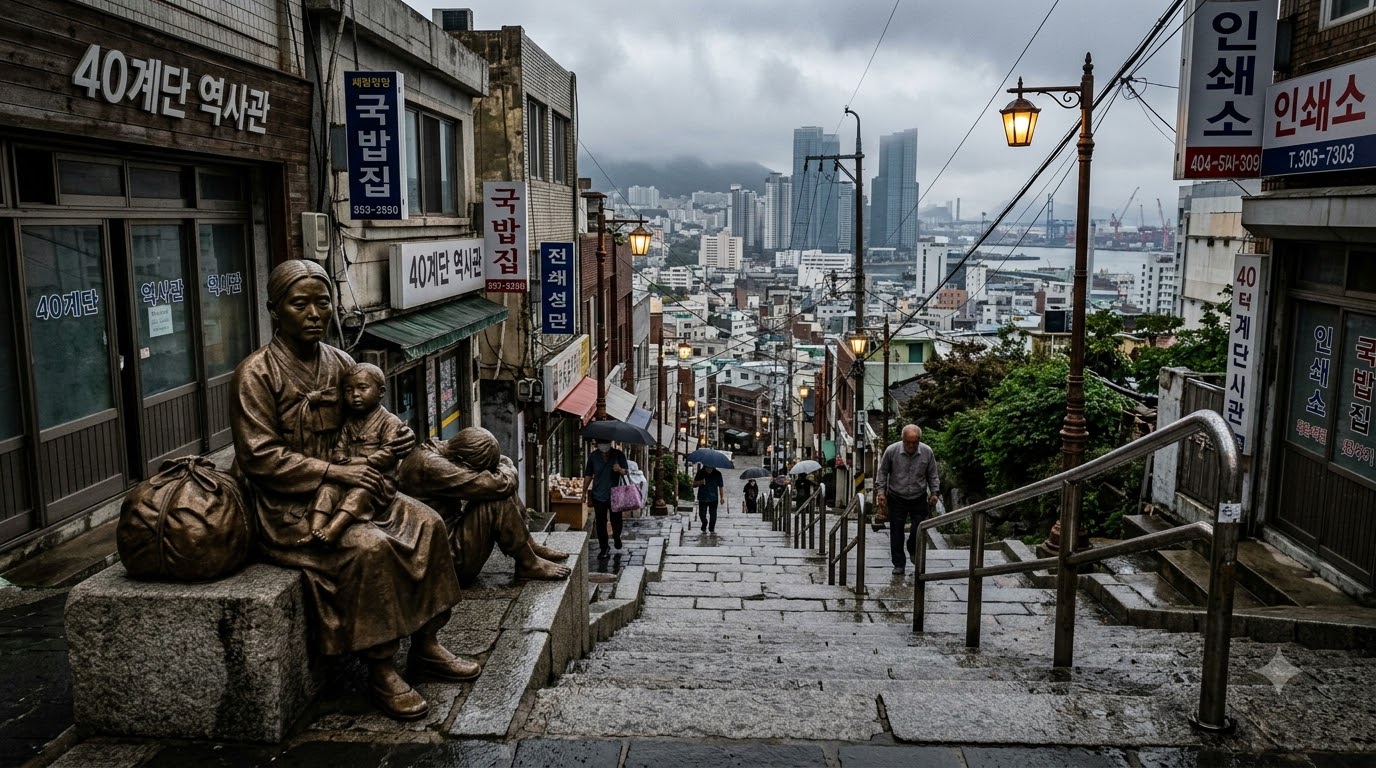
1. Amid the bustling high-rises and modern shipping ports of coastal Busan, a steep stone staircase holds the heavy emotional weight of national trauma.
2. While tourists casually photograph the historic bronze statue at the base, an insider’s view reveals the harrowing lifeline of the Korean War.
3. Following the outbreak of conflict in 1950, Busan served as the ultimate wartime capital, swelling overnight with millions of desperate refugees.
4. Displaced families fleeing advancing northern forces gathered on these 40 stone steps to search for lost relatives, distribute news, and trade meager possessions.
5. Makeshift tent cities spread across the surrounding hillsides, turning muddy slopes into densely packed refugee encampments under immense survival pressure.
6. The sound of weeping mothers calling out children’s names echoed constantly against the steep stone walls during those freezing winter months.
7. Today, the surrounding district preserves vintage street lamps, railway tracks, and cultural monuments immortalizing the resilience of wartime exiles.
8. Walking up the stone steps today invokes a solemn cinematic atmosphere far removed from the breezy seaside cafes dotting the nearby coastline.
9. The contrast between modern Busan’s global economic prosperity and its tragic refugee origins defines the city’s deeply resilient character.
10. Foreign travelers exploring the 40 Steps Cultural Theme Street gain a visceral understanding of how the peninsula’s modern identity was forged.
11. Bronze sculptures embedded along the pavement depict an old-fashioned fortune teller and a weary refugee mother with striking emotional realism.
12. Archival photographs displayed in nearby exhibition halls capture the chaotic tent cities that once blanketed the entire downtown harbor basin.
13. The architectural layout of the steep hillside neighborhoods traces the exact organic pathways carved out by destitute families seeking shelter.
14. Inbound cultural guides emphasize that Busan’s legendary warmth and direct communal culture stem directly from shared wartime survival trials.
15. The transition from commercial port activity to quiet historical stairways creates a powerful, grounding historical pause.
16. Visitors tracing the stone blocks feel the heavy psychological resonance of a population pushed to the absolute edge of displacement.
17. The steep incline mirrors the grueling upward climb families faced while rebuilding their shattered lives from total ruin.
18. Memorial plaques inscribed with wartime poetry offer deep literary reflections on separation, hope, and eventual regional recovery.
19. Exploring these historical steps transforms a standard coastal sightseeing trip into an emotionally resonant historical exploration.
20. The steady rumble of modern city traffic below contrasts sharply with the silent dignity preserved in the stone monuments.
21. Urban historians study this downtown pocket as a prime monument of rapid wartime urban migration and human endurance.
22. The weathered masonry blocks stand as unyielding witnesses to a generation that refused to let despair conquer their future.
23. Travelers seeking profound historical depth find this humble staircase to be an indispensable chapter in modern Korean history.
24. Sunlight glinting off nearby modern office towers highlights the remarkable distance the city traveled from its refugee roots.
25. Standing at the top of the staircase prompts deep reflection on the heavy human costs embedded in national history.
26. The engineering scale of the downtown harbor expansion demonstrates the staggering post-war transformation of the coastal hub.
27. Unearthing wartime refugee milestones adds essential emotional gravity to any comprehensive exploration of southeastern ports.
28. Visitors depart the historic street with a profound reverence for the unbreakable spirit of wartime Busan residents.
29. Exploring refugee heritage sites enriches the traveler’s comprehension of Korea’s twentieth-century communal bonds.
30. Step up the historic 40 Steps and confront the poignant refugee history underlying modern coastal Busan.
| Insider Playbook: 40 Steps Historical Trail | |
|---|---|
| Time & Location | 10:00 AM, Jungang Station Exit 12 / 40 Steps Cultural Theme Street |
| Viewing Point | Examine historic stone staircases, bronze refugee sculptures, and vintage street installations commemorating wartime separation. |
| Core Action | Walk up the historic grade while inspecting archival photo exhibits detailing refugee tent cities across downtown Busan. |
| Shooting Tip | Capture a poignant vertical shot framing the bronze refugee statues against the stone staircase under soft morning light. |
Slug: secret-busan-40-steps-refugee-tears
Tags: 40 Steps, Secret Busan, Korean War Refugees, Jungang-dong, Busan History, Dark Tourism