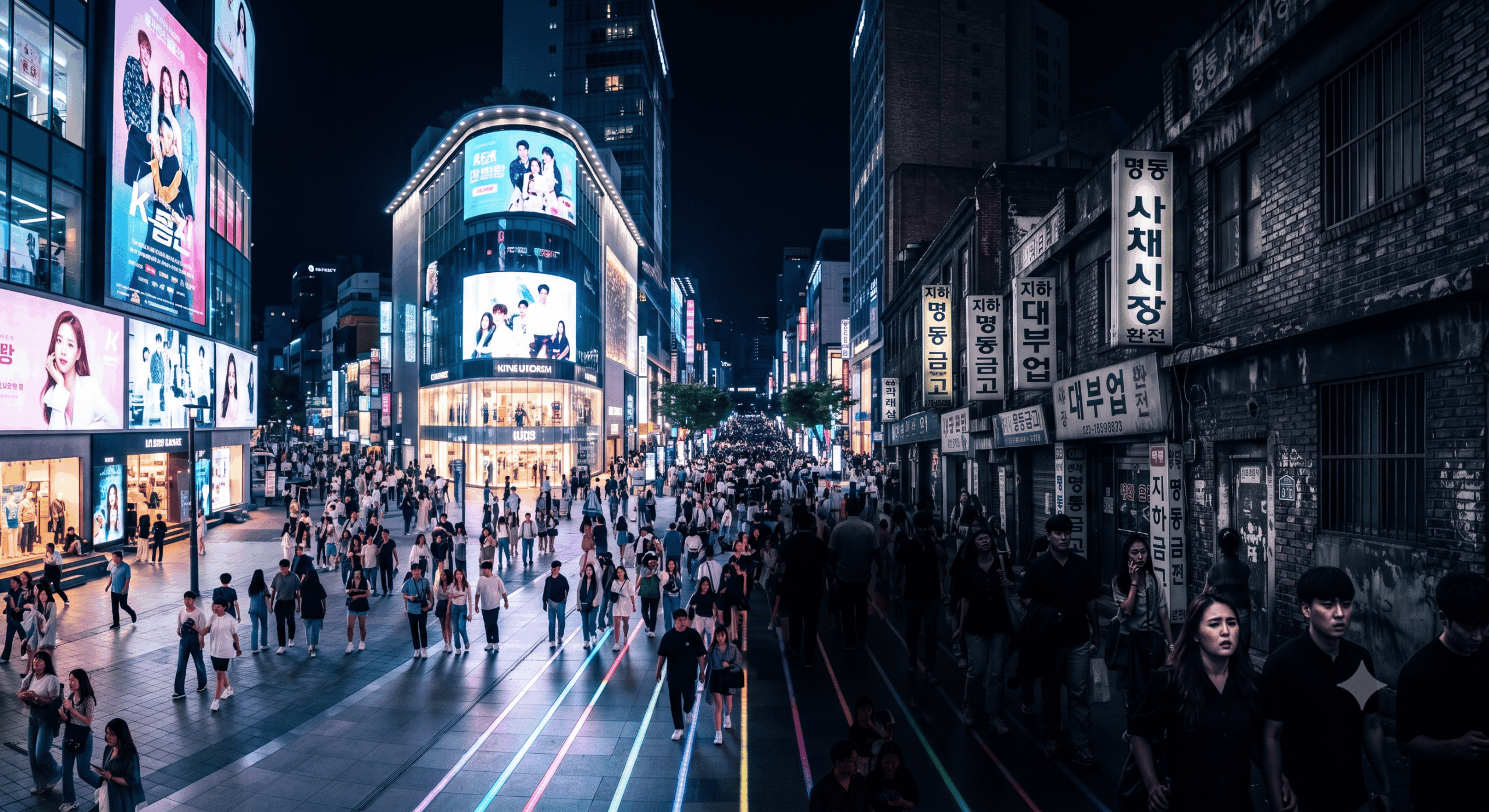
- When the founding chairmen of Samsung and Hyundai faced sudden, catastrophic bankruptcy and commercial banks slammed their doors shut, they did not file for official corporate restructuring.
- Instead, desperate executives packed heavy bags of promissory notes and walked in absolute, heart-pounding secrecy into the hidden back alleys of Myeongdong to beg for cash from the legendary private lenders of Seoul’s underworld.
- To millions of international tourists today, Myeongdong is celebrated worldwide as South Korea’s ultimate neon-lit shopping paradise, packed with trendy cosmetics, bustling street food stalls, and high-end fashion flagships.
- It pulses with vibrant K-culture energy, drawing crowds of global travelers day and night beneath towering digital billboards and luxury department stores.
- But if you look beneath the shiny commercial surface, the real history behind Myeongdong’s rise plays out like a high-stakes political thriller and a ruthless financial noir.
- The Bloodline of an Underground Empire
- The story of Myeongdong’s financial dominance traces back to its post-war origins, evolving rapidly through South Korea’s hyper-growth era in the mid-20th century.
- At a time when the nation’s official banking system was primitive, heavily restricted, and utterly incapable of meeting the massive capital demands of rapidly expanding conglomerates, a shadow economy filled the void.
- This was the birth of the legendary Myeongdong private loan market, a parallel financial empire fueled entirely by massive amounts of physical cash and unwritten trust.
- When corporate giants faced liquidity walls, this shadow banking network was driven by an unwritten code of absolute secrecy and brutal efficiency that was often far more feared and respected than the official legal system of the state.
- The legends of Myeongdong’s shadowy lenders are woven deep into modern Korean folklore; they were figures who could bail out a top-tier corporation with a single phone call or crush an unfaithful borrower overnight without ever involving a court or a lawyer.
- To truly understand the dark, gritty history of Seoul beneath its modern economic miracle, you have to peel back the glittering facade and step into this high-stakes, ruthless noir labyrinth where fortunes were made and destroyed in pitch-black basements.
- The 1960s Turning Point: From Silent Back Alleys to Financial Fortresses
- A major turning point occurred as South Korea’s rapid industrialization concentrated unimaginable wealth into the hands of a select few private lenders operating right out of unassuming commercial buildings in Myeongdong.
- The controversy and mystique lie in how these enormous fortunes were accumulated and protected outside state oversight.
- While government regulators occasionally launched crackdowns to curb illegal high-interest private lending, the sheer liquidity controlled by Myeongdong’s elite moneylenders made them too powerful to completely dismantle.
- They functioned as the invisible backbone of corporate expansion, quietly funding projects that shaped modern Seoul while keeping their identities strictly confidential.
- Myeongdong transformed the barren post-war economy by pumping billions of unofficial won into desperate enterprises, ultimately laying the groundwork for the corporate powerhouses we know today.
- In summary: A shadow financial labyrinth once preserved by absolute secrecy and ruthless private lenders was later modernized, ultimately transforming into the glittering commercial sanctuary that draws millions of shoppers from around the world today.
- When you walk beneath the bright lights of Myeongdong today, knowing this hidden clash of history makes the landscape look entirely different.
- Practical Travel Logistics for 2026
- If you are planning your visit, here are the essential details to organize your trip efficiently:
| Category | Practical Details |
| Location | Myeong-dong, Jung-gu, Seoul |
| How to Get There | Take Seoul Subway Line 4 to Myeongdong Station (Exits 6, 7, or 8) or Line 2 to Euljiro 1(il)-ga Station. |
| Admission | Free (Public commercial and shopping district) |
| Walking Tour Entry | Self-guided exploration of the historic back alleys behind the main commercial avenues. |
| Best Time to Visit | Take an early morning walk between 7:30 AM and 8:00 AM to explore the quiet alleys before major crowds and tour groups arrive. |
| Local Dining | The narrow side streets and food alleys are famous for traditional Korean street snacks and historic local eateries. |