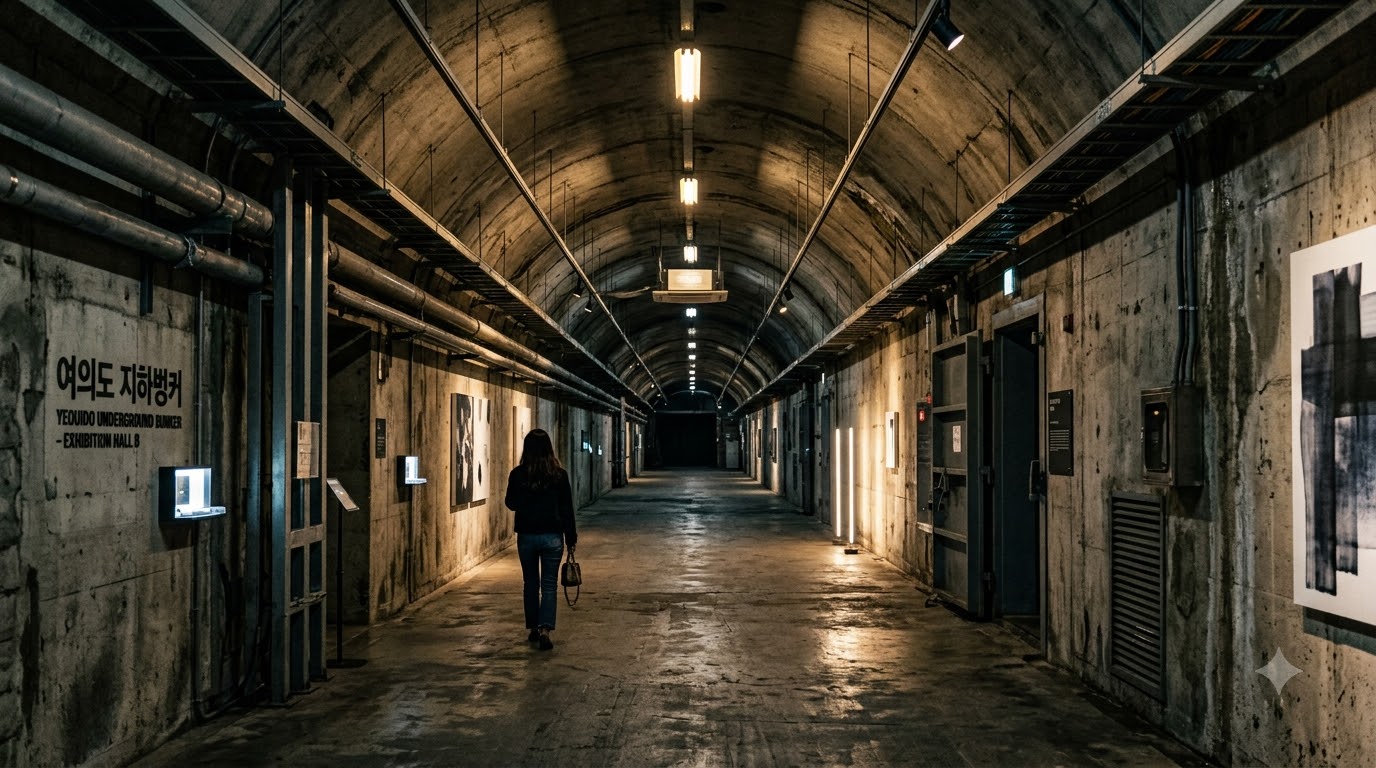
1. Beneath the calm concrete pedestrian walkways of Seoul’s bustling financial districts lie forgotten networks of Cold War military bunkers.
2. While daily commuters rush past aboveground subway grates, an explorer’s perspective uncovers subterranean redoubts engineered for supreme political survival.
3. The Yeouido Underground Bunker, discovered accidentally during road construction, reveals a massive reinforced concrete command center built for authoritarian leaders.
4. Constructed during the 1970s amid intense North-South paranoia, these hidden chambers were designed to protect high-ranking officials from aerial bombardment.
5. Thick steel blast doors, damp concrete walls, and archaic communication switchboards evoke an eerie atmosphere of suspended nuclear threat.
6. Long before modern art installations transformed portions of these spaces into public galleries, they served as top-secret military operational nodes.
7. Urban exploration reveals that similar classified bunkers connect major government administration buildings across the central downtown grid.
8. The juxtaposition of contemporary hip art exhibits hanging inside blast-proof concrete tunnels creates a powerful cultural friction.
9. Descending beneath the asphalt strips away the city’s glossy corporate exterior, exposing the paranoid defensive architecture of post-war survival.
10. Architectural blueprints indicate that emergency escape routes span outward toward riverbanks and hidden command outposts.
11. Foreign tourists strolling past modern park benches remain entirely unaware of the massive fortified vaults resting just meters beneath their shoes.
12. The damp, mineral scent lingering in the underground corridors serves as an olfactory reminder of mid-century military containment.
13. Historical records highlight how fear of sudden artillery strikes dictated the underground expansion of critical metropolitan infrastructure.
14. Modern civil defense drills still utilize portions of these networks, integrating historical survival structures into contemporary safety planning.
15. Walking through reinforced steel corridors gives visitors a visceral taste of Cold War psychological confinement.
16. The transition from sunny riverside parks to subterranean concrete bunkers encapsulates Seoul’s layered historical identity.
17. Inbound guides note that urban planning in the capital has always operated under dual imperatives: commercial growth and military hardening.
18. The preservation of these bunker spaces allows contemporary citizens to physically touch the hidden anxieties of previous generations.
19. Exploring underground vaults offers a brilliant intellectual escape from standard tourist itineraries into classified municipal history.
20. The heavy echoing of footsteps against bunker floors amplifies the absolute silence carved into rock foundations.
21. City officials continue to map newly discovered subterranean cavities as old commercial districts undergo deep redevelopment.
22. The contrast between aboveground commercial freedom and underground military engineering defines metropolitan resilience.
23. Travelers seeking authentic urban anomalies find these converted bunkers to be premier examples of adaptive historical reuse.
24. The dim industrial lighting casting long shadows across bare concrete walls provides a natural atmospheric set for historical storytelling.
25. Standing inside a former presidential emergency room sparks deep reflections on political survival mechanics during volatile eras.
26. The engineering scale of these hidden structures demonstrates the staggering allocation of state resources toward national defense.
27. Unearthing subterranean secrets transforms ordinary pavement into a fascinating layer cake of Cold War engineering.
28. Visitors emerge back into daylight with a heightened awareness of the hidden concrete bones supporting the modern metropolis.
29. Exploring municipal underworlds enriches the traveler’s comprehension of Seoul’s complex defensive evolution.
30. Step down into the concrete vaults and explore the hidden Cold War bunkers guarding the city’s underbelly.
| Insider Playbook: Subterranean Bunker Trail | |
|---|---|
| Time & Location | 2:00 PM, Yeouido Station / Yeouido Underground Bunker Entrance near Bus Transfer Center |
| Viewing Point | Examine reinforced concrete blast doors and preserved military command posts now functioning as underground exhibition spaces. |
| Core Action | Walk the subterranean tunnel grid, observing how contemporary media art installations interact with brutalist bunker architecture. |
| Shooting Tip | Capture a leading-line perspective shot down the long, dim concrete hallway illuminated by modern exhibition lights. |